Loading...
Serving Chula Vista, CA and surrounding areas. (858) 341-2115
A wobbly or rotting railing is a safety issue, not just an eyesore. We install railings that pass city inspection, hold up in Chula Vista's coastal air, and look right for your home - wood, aluminum, cable, or glass.
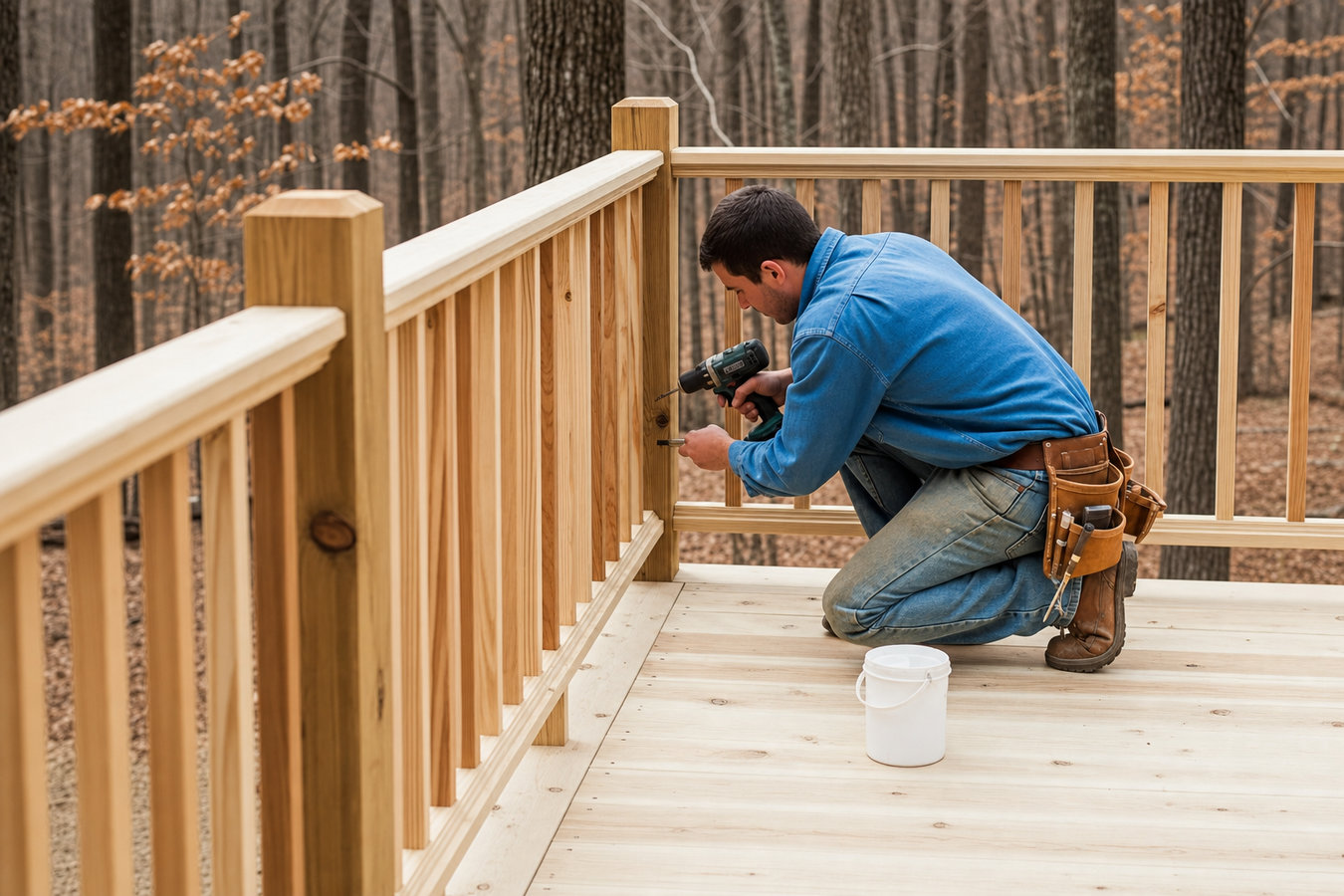
Deck railing installation in Chula Vista means anchoring posts into the deck frame, running top and bottom rails between them, and filling the space with balusters, cable, or glass panels - most residential installations are completed in a single full workday once materials are on-site and permits are in hand.
California requires a railing system on any deck surface that sits 30 inches or more above the ground, and Chula Vista enforces that requirement through its permit and inspection process. This is not just a code formality - a properly installed railing is what prevents a fall off an elevated deck, and the posts are the most critical part. Many homeowners discover their existing railing was installed under older rules that are no longer current, particularly in the older western neighborhoods of the city. If you are also building a new deck, we coordinate railing installation as part of the same project - see our multi-level decks and custom deck design and build pages for how those projects come together.
Material choice has a bigger impact in Chula Vista than in most inland cities. Homes in the western part of the city near San Diego Bay deal with salt-laden air that corrodes standard metal hardware and accelerates wood deterioration. Powder-coated aluminum and stainless steel cable systems are the most popular low-maintenance options here, while wood remains a strong choice for homeowners who commit to regular sealing and repainting.
Stand at any section of your deck railing and push firmly outward with both hands. If you feel any movement, flex, or hear creaking at the base of the posts, the railing is no longer structurally sound. This is the clearest sign that replacement is overdue - a railing that moves is a railing that could fail, especially on an elevated deck.
Run your hand along the top rail and press your thumb into the post bases. If the wood feels spongy, crumbles slightly, or shows deep cracks running along the grain, moisture has gotten inside and the wood is rotting from within. In Chula Vista's western neighborhoods near the bay, this kind of moisture damage can happen faster than homeowners expect because of the salt-influenced air - even on decks that look fine from a distance.
Look at the spacing between the balusters - the vertical pieces between the top and bottom rails. If you can fit your fist through the gap, the spacing is too wide to meet current safety standards. This is especially important if you have young children or grandchildren who use the deck, and it is a common issue on older Chula Vista homes where railings were installed under previous building rules.
Older railings on homes built in the 1970s and 1980s - which make up a large share of western Chula Vista's housing stock - were sometimes installed at heights that no longer meet current safety requirements. If the top rail hits you at hip height or below, it is worth having a contractor measure it. Upgrading to the correct height is often straightforward and can be done as part of a full railing replacement.
Wood railings are still the most installed option for homeowners working with a tighter budget or replacing railings on an existing wood deck. They suit the traditional look of many older Chula Vista homes, particularly in the western neighborhoods, and they can be painted or stained to match the existing deck or house color. The trade-off is maintenance: wood needs to be sealed and repainted every few years to stay looking right and resist moisture, especially in areas near the coast where salt air accelerates wear. For homeowners who want lower upkeep, powder-coated aluminum is the most popular alternative - it resists corrosion, holds its color under UV exposure, and requires almost no seasonal maintenance. Cable railing systems have gained real popularity in newer builds and remodels, particularly in coastal communities, because the horizontal cable runs give an open feel and a clean modern look without obstructing the view.
Glass panel railings are the premium option for homeowners who want maximum visual openness and a contemporary finish. Tempered glass panels sit in aluminum posts and channels and give the deck a finished, architectural look that photographs well and impresses buyers. Hardware grade matters across all systems - we use stainless steel or hot-dipped galvanized fasteners throughout so the connection points do not rust and weaken the structure within a few years. Whatever system you choose, the post installation is the step that determines whether the railing is actually safe - posts must be anchored solidly into the deck frame, not just surface-screwed into decking boards.
The most affordable upfront option - best for homeowners who commit to a regular sealing and painting schedule and prefer a traditional look.
Low-maintenance and highly resistant to salt air and UV exposure - the practical choice for western Chula Vista neighborhoods close to the bay.
An open, modern look popular in coastal communities - suited to homes where an unobstructed view of the yard or ocean horizon matters.
Maximum visual openness with a clean, contemporary appearance - chosen by homeowners who want a premium finish and an unblocked sightline from the deck.
Chula Vista's mild Mediterranean climate means decks are used year-round - there is no real off-season here the way there is in colder parts of the country. That consistent use puts more wear on railings than in climates where decks sit unused for months. It also means the salt air coming off San Diego Bay reaches a meaningful portion of the city's homes on a daily basis, and that air is hard on metal hardware and untreated wood in ways that homeowners do not always anticipate until they see the results. Homes in National City and Coronado face even more direct coastal exposure and benefit from the same coastal-grade material choices.
The western part of the city - neighborhoods like Castle Park, Harborside, and the area around Third Avenue - has a large concentration of homes built in the 1960s through 1980s. Many of those homes still have their original railings, which were installed under older building rules that no longer meet current safety standards for height or baluster spacing. If your home falls in that category, a railing replacement is not just an upgrade - it is a safety correction. The City of Chula Vista Development Services department handles permits and inspections for railing work, and the North American Deck and Railing Association (NADRA) publishes the industry safety standards that govern how railings should be built and tested.
We respond within one business day and schedule a visit to your home. We measure the deck perimeter, inspect how the existing structure is built, and walk through your material and style options in person. You receive a written estimate, typically within a day or two of the visit.
If your project requires a building permit - which is common for new railing installations in Chula Vista - we handle submitting the application to the city's Development Services department. Permit approval can take anywhere from a few days to a couple of weeks. We keep you updated on where things stand so you are not left wondering.
Once the permit is approved (or confirmed not needed), we order materials and put you on the schedule. Standard aluminum or wood components are usually available quickly. Custom cable systems or specialty glass panels may take longer. We give you a realistic installation date and let you know if anything changes.
Most residential railing installations are completed in a single full workday. We remove any old railing, install new posts, rails, and balusters, and clean up before leaving. If a permit was pulled, a city inspector signs off on the completed work. We schedule that inspection and walk you through the finished railing once it passes.
We respond within one business day, handle permits and HOA approvals, and leave the job site clean. A written estimate is yours before any work begins - no obligation.
(858) 341-2115Homes in western Chula Vista near the bay deal with salt air that accelerates rust on standard iron hardware and surface corrosion on lower-grade metals. We specify stainless steel or hot-dipped galvanized fasteners for every coastal installation - the difference between a railing that holds up for 20 years and one you are replacing in five.
If you live in Eastlake, Otay Ranch, or Rolling Hills Ranch, your HOA has design rules about railing colors, materials, or profiles. We ask about those guidelines before we recommend a single material and prepare the submission package on your behalf. The finished railing is one your HOA board will approve of - not a source of a violation letter after the work is done.
We handle the permit application through Chula Vista's Development Services department and schedule the city inspection once the work is complete. You never need to make a single call to the city. Every railing we install is permitted, inspected, and on record - which matters if you ever sell your home or file an insurance claim.
Posts are the most important part of the whole railing system - the vertical anchors bolted into your deck frame that carry all the load when someone leans against the rail. We install posts with solid, tight connections that feel completely stable. If anything does not feel right after the job is done, we come back and fix it before we consider the project complete.
You can verify that any contractor working on your home holds a valid California license through the California Contractors State License Board (CSLB) website in about 30 seconds. When our work is inspected and signed off by the city, you have an independent confirmation that the railing is built to the standards that protect your family and your home's value.
Build a new deck from scratch with railings integrated into the design from day one - the cleanest and most cost-effective approach.
Learn MoreAdding railings to every elevated tier of a multi-level deck is a required safety step we coordinate as part of the full build.
Learn MoreWe handle the permit, the inspection, and the cleanup - call or submit a form now and we will be back to you within one business day.